The chairperson who has been a trustee for nine years doesn’t stand for re-election. Everyone thanks them at the AGM. Two weeks later, the new trustees realise how much of the scheme lived in that one person’s head.
Why was unit 8 allowed to enclose its balcony? Which plumber did a good job and which one should never be called again? What did the scheme agree with the owner in unit 22 about the damp wall? Did anyone ever get back to the owner who reported cracks in block B?
The answers are somewhere: a personal Gmail inbox, a WhatsApp chat, a lever-arch file in a garage in Pinelands. None of those came with the handover.
The records belong to the body corporate
It’s easy to forget, but the scheme’s records aren’t the trustee’s records. The body corporate has to keep minutes, resolutions, financial records, its rules and its maintenance plan, and owners are entitled to see much of that.
So a trustee who runs the scheme’s business from a personal inbox isn’t just being informal. The body corporate’s records are sitting somewhere the body corporate doesn’t control, and they leave when that trustee does.
The formal records usually survive, because the managing agent keeps minutes and financials. What goes missing is everything between the formal records: the working context that explains why things are the way they are.
What actually leaves with a trustee
- The reason behind decisions. The minutes say “approved.” They don’t say what was approved, on what conditions, or which drawings were used.
- Open promises. “We’ll look at it after winter” is a promise a resident remembers and a new trustee has never heard.
- Contractor knowledge. Who is reliable, who quoted too high last time, and who holds a guarantee on the roof waterproofing.
- Patterns. Knowing that this is the fourth noise complaint about the same unit, not the first.
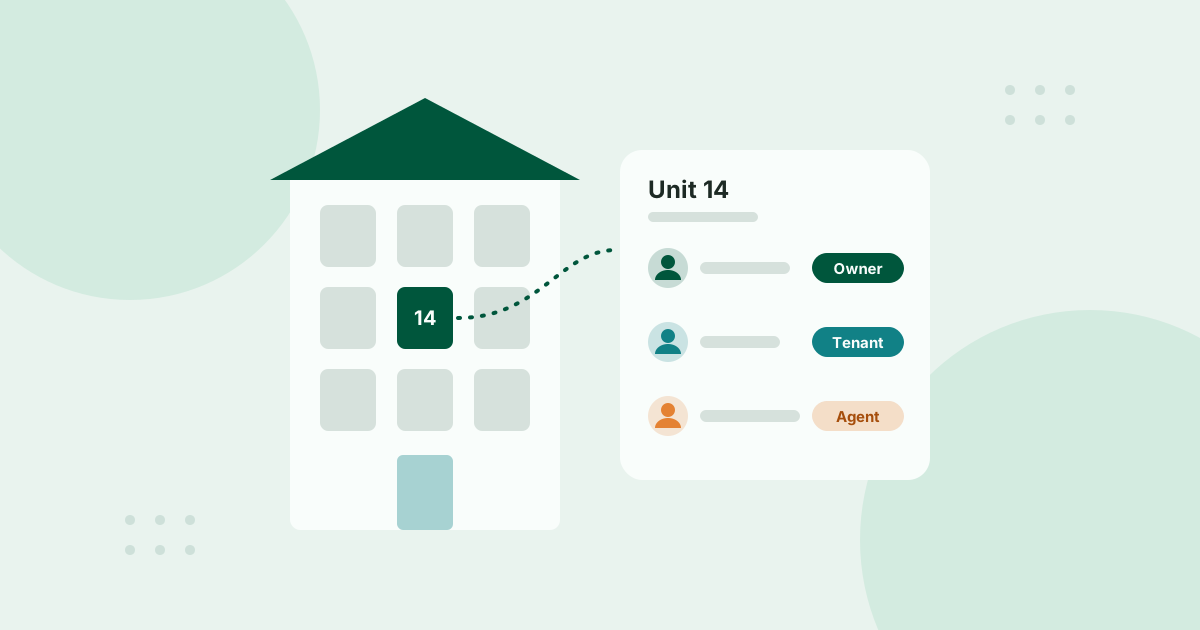
- Unit-specific quirks. The shared water meter, the geyser in a ceiling you can only reach from next door, and the owner who is abroad and only reads WhatsApp.
Why handover documents don’t work
The standard fix is to ask the outgoing trustee to write a handover document. It’s better than nothing, but not much better.
It gets written in the last week, by someone who is leaving, from memory. It covers what they remember was important, not what the new trustee is going to run into. And it’s out of date as soon as it’s sent, because nobody updates a handover document afterwards.
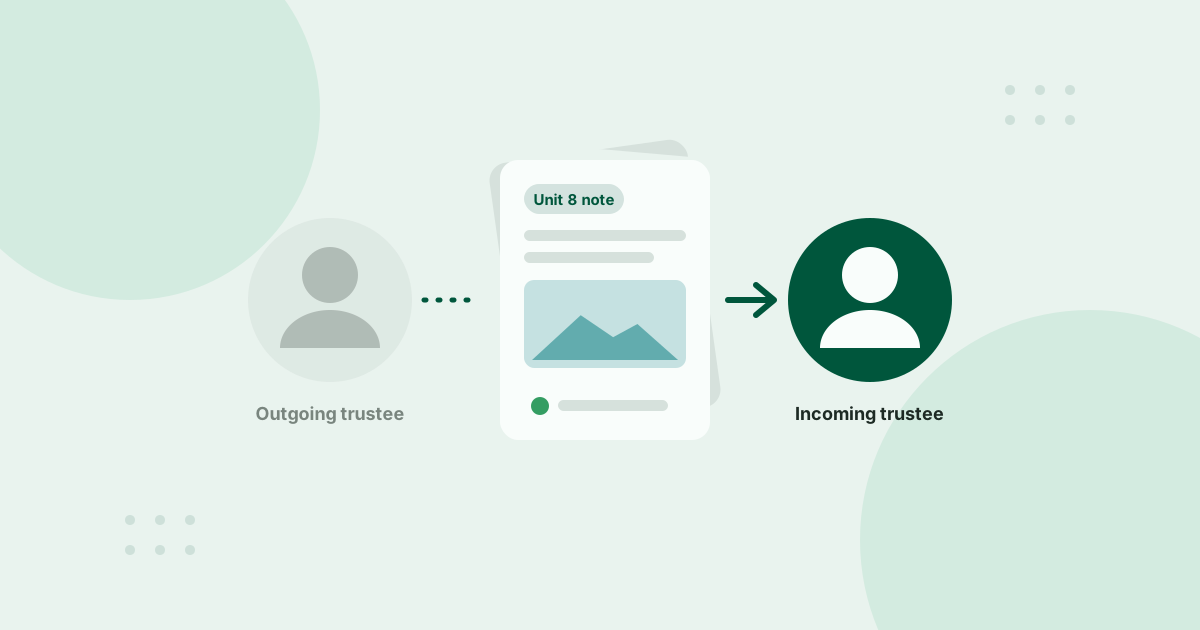
The real fix is to not need a handover at all: record things as they happen, in a place the role controls rather than the person.
What a new trustee needs on day one
If the scheme’s records are kept in one shared place, a new trustee’s first week looks like this, and not like an archaeology project:
- Every open issue and complaint, with its history, photos and who was notified.
- Every open maintenance job, with the assigned contractor and how far along it is.
- Notes on each unit and on the scheme as a whole, especially decisions that won’t make sense later without the reasoning.
- An accurate owner and occupant register, so they know who they’re dealing with.
- A record of who changed what and when, so “I think the previous trustees agreed to that” can be checked.
Build the habit before you need it
The best time to fix trustee handover is two years before the next one. Some small habits make the difference:
- Write a note when a decision is made, not when someone asks about it later.
- Attach the photo. A picture of the damp wall on the day it was reported ends arguments that a description can’t.
- Stop running scheme business in personal channels. The WhatsApp group is fine for “the gate is stuck.” Decisions and complaints need to go somewhere permanent.
- Give access through the trustee role, not the individual. When someone steps down, their access ends and everything they recorded stays.
Handled this way, the chairperson’s last day is a normal day. Everything they knew is already recorded, and the scheme doesn’t lose any of it when they leave.