
Search for body corporate management software and you’ll find a page of products that all claim to do everything. Most of them were built to do one thing very well, and it’s worth knowing which thing before you sit through a demo.
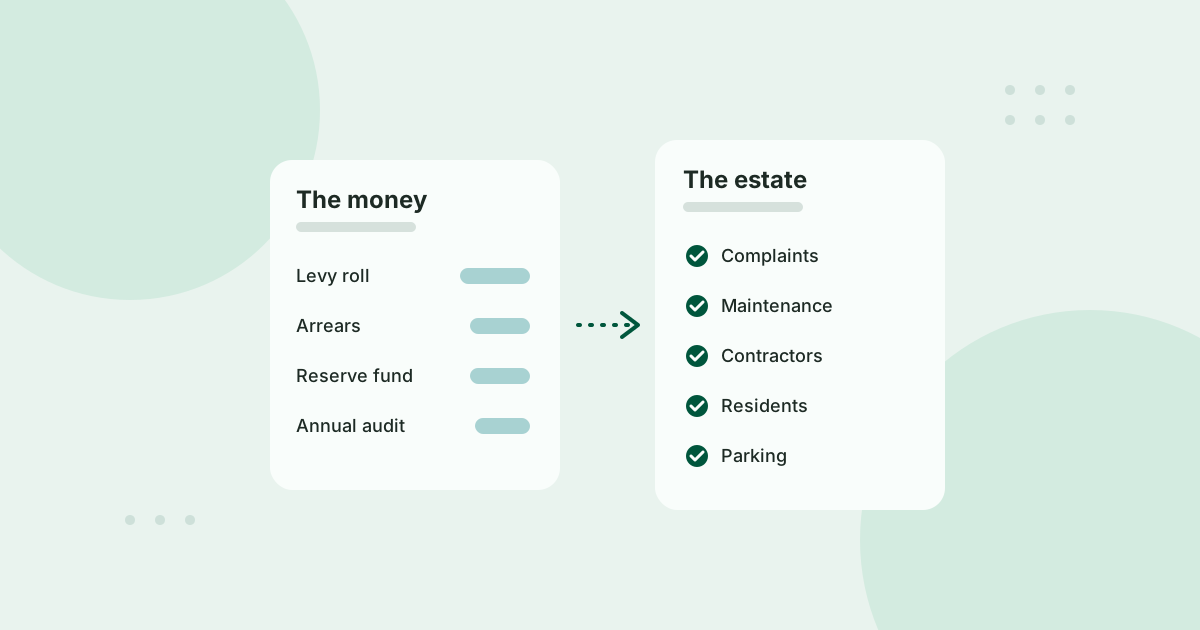
There are two quite different jobs hiding under the same name.
Job one: the money
Levy billing, the trust account, arrears and collections, the budget, the reserve fund, and the annual financial statements the auditor signs off. This is the work the Sectional Titles Schemes Management Act puts the heaviest obligations on, and it’s where the established platforms in South Africa, the ones that come up first in search, started. Most of them are built around scheme accounting and are mainly used by managing agents running many schemes at once.
If your scheme has a managing agent, this job is almost certainly already done. The agent runs the books on their own system, and every month you get a management pack with the levy roll, the debtors list and the income statement. Buying a second accounting system as a trustee doesn’t help; it gives you two sets of numbers to reconcile.
If your scheme is self-managed, this is the job you need covered first. Look for a platform built specifically for sectional title accounting, not a generic bookkeeping package, and check that it handles the reserve fund and the CSOS levy without spreadsheet workarounds.
Job two: running the estate
Everything that isn’t money. Who lives in unit 14 and whether they’re the owner or a tenant. The complaint about the dog on the second floor and what was done about it. The gate motor that’s been “with the contractor” since June. Which car belongs in which bay. What the trustees decided last year, and why.
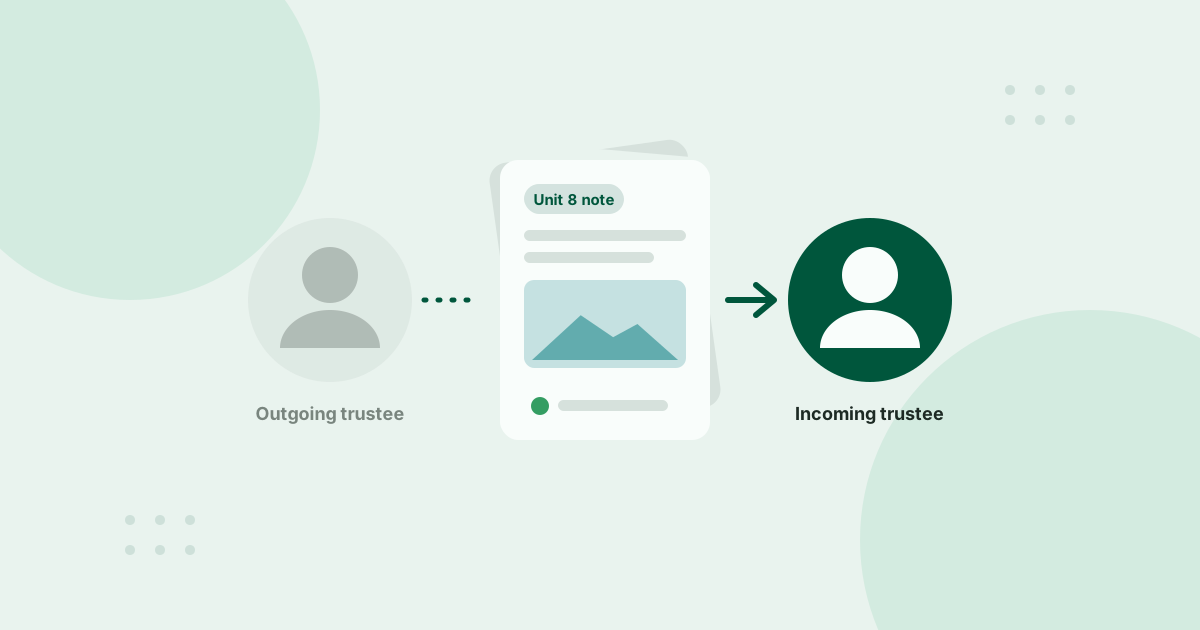
This is where most trustee time actually goes, and it’s the part accounting platforms treat as an afterthought, if they cover it at all. It usually lives in WhatsApp groups, personal inboxes and a spreadsheet one trustee keeps on their laptop. That works until the trustee moves out, or a dispute reaches the Community Schemes Ombud Service and nobody can show when the complaint was first lodged.
Which one is your scheme missing?
Answer these honestly:
- Do you have a managing agent doing the books? If yes, you need job two, not job one.
- Can you produce, in five minutes, every open complaint and maintenance job with who’s responsible? If not, you need job two.
- Would a new trustee be able to pick up where the last one left off without a two-week email handover? If not, job two.
- Are levies, arrears and the year-end audit a struggle every month? That’s job one, and it comes first if nobody else is doing it.
What to check in an estate operations tool
- Everything hangs off the unit. Owners, tenants, cars, bays, complaints and notes should all be linked to the unit they belong to, so the history moves with the unit, not with whoever recorded it.
- Complaints keep their trail. Date logged, severity, the conduct rule involved, photos, and every follow-up note. That record is what you’ll need if a matter goes to CSOS.
- Maintenance has owners and states. A named contractor per job, and a blocked state that’s separate from in progress, so you know which jobs actually need chasing.
- Contractors see only their own work. A contractor portal is useful; a contractor browsing the owners’ register is a POPIA problem.
- It works alongside your agent, not around them. You should be able to send an issue to the managing agent from where it’s recorded, rather than retyping it into an email.
- It shows the agent’s numbers without redoing them. Trustees shouldn’t need to open the monthly management pack to see which units are in arrears. A good operations tool reads the levy roll and debtors report from the pack and shows them per unit, while the agent’s system stays the source of truth.
- A record of who changed what. When trustees disagree about what happened, an audit trail settles it.
- Handover is a non-event. Records belong to the body corporate, not to a person’s login.
Before you book demos
Write down the three things that cost your trustees the most time in the last six months. Then ask every vendor to show you exactly those three things, using your scheme’s situation, not their sample data. The right tool is the one that makes those three things boring, whatever else it claims to do.
If job two is the gap, here’s how we approach body corporate management.